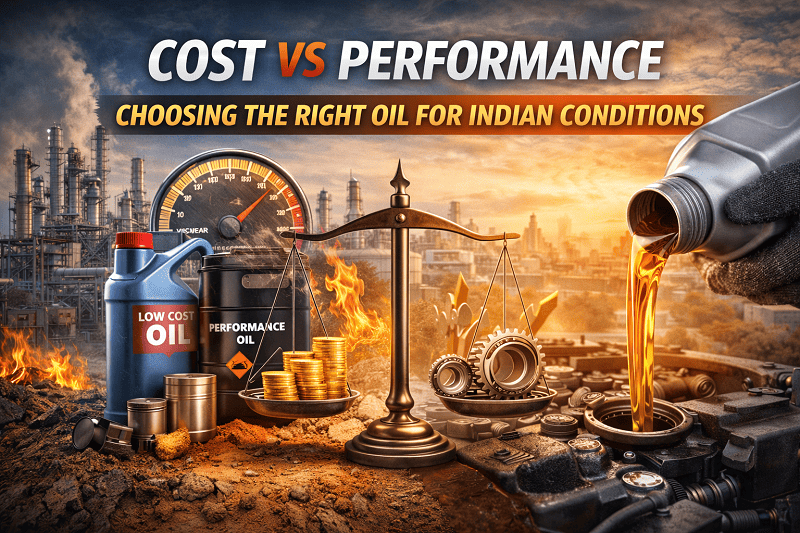
In the industrial landscape of India, where operational efficiency and cost control go hand in hand, selecting the right industrial oil is not just a technical decision—it is a strategic one. Many businesses, especially small and mid-sized operations, often focus heavily on reducing upfront costs when purchasing lubricants. While this approach may seem economical in the short term, it can lead to higher long-term expenses due to increased maintenance, equipment wear, and unexpected downtime. The real challenge lies in striking the right balance between cost and performance, particularly in Indian conditions where environmental and operational factors add an extra layer of complexity.
Industrial oils serve as the lifeblood of machinery, ensuring smooth operation, reducing friction, and protecting components from damage. However, not all oils are created equal, and choosing the cheapest option without evaluating its performance can prove to be a costly mistake. Understanding how cost and performance interact—and how Indian conditions influence this relationship—is essential for making informed decisions that support long-term business success.
Understanding the True Cost of Industrial Oil
When evaluating industrial oil, the price per litre is often the first factor that buyers consider. However, this metric alone does not provide a complete picture. The true cost of industrial oil extends far beyond its purchase price and includes factors such as oil lifespan, maintenance requirements, energy efficiency, and the impact on machine components.
Low-cost oils may require more frequent replacement due to faster degradation, leading to increased downtime and higher labour costs. Additionally, inferior lubrication can result in accelerated wear and tear, reducing the lifespan of expensive machinery. Over time, these hidden costs can far exceed the initial savings achieved by choosing a cheaper product.
On the other hand, high-performance oils are designed to last longer, maintain stability under extreme conditions, and provide superior protection. While their upfront cost may be higher, they often reduce the frequency of oil changes, minimize maintenance interventions, and improve overall operational efficiency. This makes them a more cost-effective choice in the long run.
Performance Matters More in Indian Conditions
India presents unique challenges for industrial operations due to its diverse climate and working environments. High temperatures in many regions can accelerate oil oxidation, causing it to lose its effectiveness more quickly. Humidity, especially in coastal areas, can lead to moisture contamination and corrosion, while dusty conditions in industrial zones increase the risk of particle contamination.
In such environments, performance becomes even more critical. Oils with high thermal stability and strong oxidation resistance are essential for maintaining consistency under heat. Similarly, lubricants with advanced additive packages can help combat contamination and prevent the formation of sludge and deposits.
Choosing oil based solely on cost without considering these environmental factors can result in frequent failures and increased operational disruptions. Businesses must prioritize performance attributes that align with Indian conditions to ensure reliability and durability.
The Role of Viscosity and Stability
Viscosity plays a crucial role in determining how well an oil performs under different operating conditions. In high-temperature environments, oils with poor viscosity stability may thin out, reducing their ability to protect moving parts. Conversely, oils that are too thick can create resistance and increase energy consumption.
High-performance oils are formulated to maintain consistent viscosity across a wide temperature range, ensuring optimal lubrication at all times. This stability is particularly important in India, where temperature variations can be significant between seasons and regions.
By investing in oils with the right viscosity characteristics, businesses can improve machine efficiency, reduce energy consumption, and prevent costly breakdowns.
Additives: The Hidden Performance Enhancers
Additives are a critical component of industrial oils, enhancing their ability to perform under challenging conditions. Anti-wear additives reduce friction and extend the life of components, while anti-oxidants slow down the degradation process. Detergents and dispersants keep the system clean, preventing the buildup of harmful deposits.
High-quality oils often contain advanced additive packages that provide multiple layers of protection. These additives become particularly valuable in Indian industrial environments, where contamination and extreme conditions are common.
While oils with superior additives may come at a higher cost, their ability to protect machinery and maintain performance makes them a worthwhile investment.
Equipment Longevity and Maintenance Savings
One of the most significant advantages of using high-performance industrial oil is its impact on equipment longevity. Proper lubrication reduces friction, minimizes wear, and prevents overheating, all of which contribute to extending the lifespan of machinery.
In contrast, using low-quality oil can lead to frequent breakdowns and the need for costly repairs or replacements. Maintenance teams may spend more time addressing issues caused by inadequate lubrication, resulting in lost productivity and increased operational costs.
By choosing the right oil, businesses can reduce maintenance frequency, improve equipment reliability, and achieve substantial cost savings over time.
Energy Efficiency and Operational Performance
Industrial oils also play a role in energy efficiency. Proper lubrication reduces friction between moving parts, allowing machines to operate more smoothly and consume less energy. In large-scale operations, even small improvements in energy efficiency can translate into significant cost savings.
High-performance oils are designed to optimize energy usage by maintaining consistent lubrication and reducing resistance. This not only lowers energy bills but also contributes to a more sustainable and environmentally friendly operation.
In India, where energy costs can be a major concern for industries, investing in efficient lubrication solutions can provide a competitive advantage.
Supplier Reliability and Product Consistency
Choosing the right industrial oil is not just about the product itself—it also involves selecting a reliable supplier. Consistency in quality is essential for maintaining predictable machine performance. Variations in oil composition can lead to inconsistent results and increased maintenance issues.
A trusted supplier provides not only high-quality products but also technical support and guidance. They can help businesses select the right oil for their specific applications and provide insights into optimizing lubrication practices.
Building a strong relationship with a dependable supplier ensures that businesses receive consistent quality and reliable service, reducing risks and improving operational efficiency.
Balancing Cost and Performance Strategically
The key to choosing the right industrial oil lies in balancing cost and performance strategically. Instead of focusing solely on the lowest price, businesses should evaluate the overall value that an oil provides. This includes its lifespan, performance under specific conditions, impact on maintenance, and contribution to energy efficiency.
In many cases, investing in a slightly more expensive oil can lead to significant savings in the long run. By reducing downtime, extending equipment life, and improving efficiency, high-performance oils offer a better return on investment.
Decision-makers should adopt a long-term perspective and consider the total cost of ownership rather than just the initial purchase price.
The Importance of Adaptability in Modern Work Environments
As industries evolve, there is a growing emphasis on flexibility and efficiency not only in machinery but also in workspaces. Just as industrial operations benefit from adaptable and high-performance solutions, modern professionals increasingly seek products that offer convenience and practicality in their daily routines. For instance, solutions like a foldable table for home reflect the same principle of combining functionality with efficiency—highlighting how thoughtful design and performance-driven choices can enhance productivity across different environments.
Making the Right Choice for Long-Term Success
Ultimately, the decision to choose industrial oil should be guided by a clear understanding of operational needs and environmental conditions. Businesses must evaluate factors such as temperature, load, contamination risks, and maintenance capabilities to select the most suitable product.
In the Indian context, where conditions can be demanding, prioritizing performance over short-term cost savings is essential. The right oil not only protects machinery but also ensures consistent performance, reduces downtime, and enhances overall productivity.
By adopting a strategic approach to lubrication and focusing on long-term value, businesses can achieve a balance between cost and performance that supports sustainable growth and operational excellence.